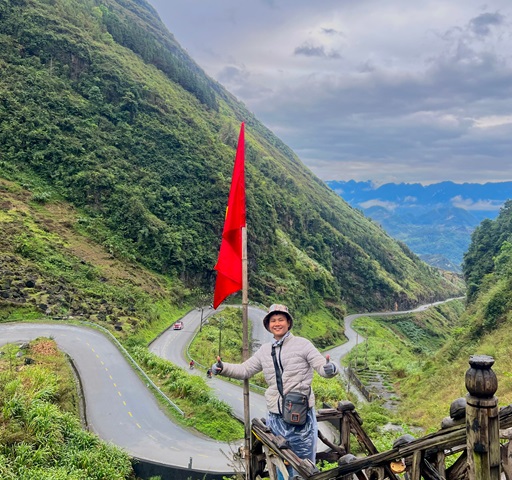

Wondering about the best time to visit Ha Giang? This mountain region in northern Vietnam has something special in every season. The weather, though, can make a big difference, especially if you’re planning to ride the Ha Giang Loop by motorbike. Some months bring clear skies and comfortable temperatures. Others come with heavy rain, thick fog or cold mountain mornings.
So when should you go? In this guide, Deep Tour shares what each season feels like, the best months for different experiences and a few practical tips to help you plan.
When is the best time to visit Ha Giang?
For most travelers, the best time to visit Ha Giang is between September and November or March and April. These months are generally nice weather, beautiful views and more bearable conditions for exploring the mountains.
Autumn, especially October and November, is one of the most popular periods. The summer rains start to ease, temperatures become cooler, and the mountains are often clearer without heavy clouds sitting in the valleys.
September is particularly good if you want to see golden rice terraces. October and November are known for the famous buckwheat flowers.
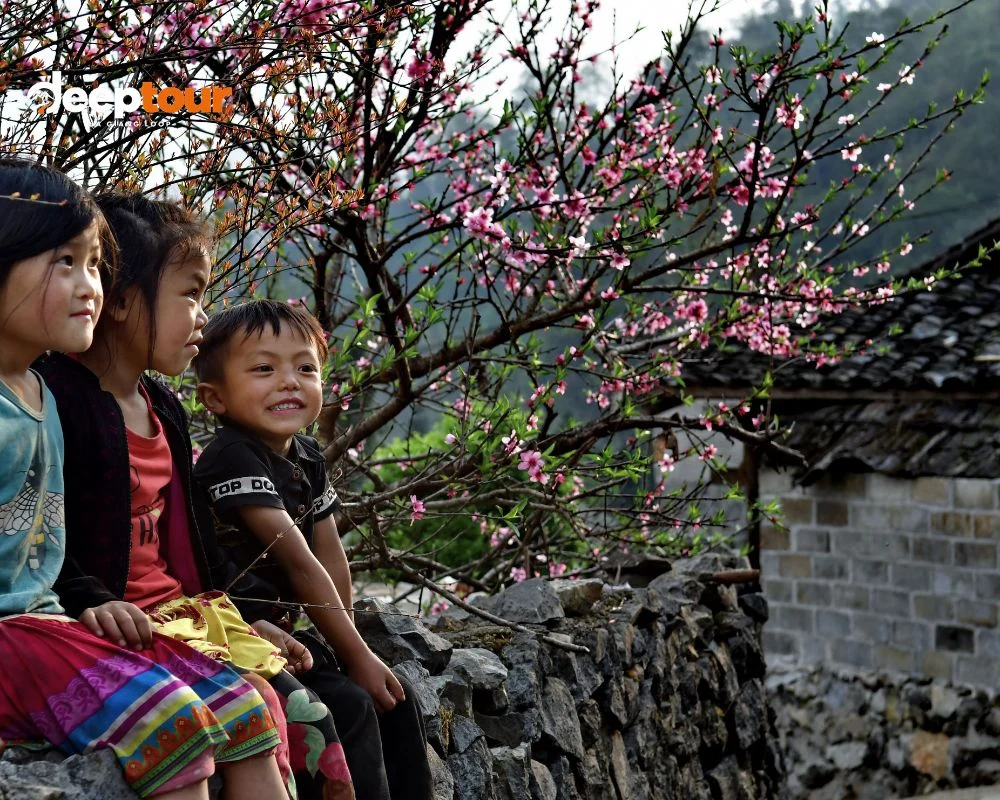
Spring is another lovely window. March and April often bring milder temperatures, fresh green landscapes, and flowering trees in some villages.
If you’re asking about the best month to travel to Ha Giang, October is a strong all-round choice. It balances good scenery with generally favorable weather. That said, there isn’t one perfect month for everyone. The best time really depends on what you want to experience. Some people come for the rice harvest, others for the flowers and many simply want reliable weather for the Ha Giang Loop.
September to November and March to April are generally the best periods to explore Ha Giang’s mountain landscapes
Best time to visit Ha Giang by season
Each season gives Ha Giang a different atmosphere. Understanding these changes will help you choose the best season to travel to Ha Giang based on your interests.
Spring (March to May): Blooming flowers
Spring is a beautiful time to explore Ha Giang if you enjoy mild weather, peaceful villages, and fresh mountain scenery.
After the cold winter, temperatures start to rise and the hills gradually turn greener. In the early part of spring you may still see peach, plum, or pear blossoms around mountain villages. These often bloom from late February into March, though the exact timing depends on the weather and altitude.
By April the landscape is greener and the warmer days make traveling through the mountains more comfortable. May marks the transition into the rainy season. Some rice terraces begin filling with water, creating nice reflections of the sky and surrounding peaks.
For anyone planning to ride the Ha Giang Loop, March and April are generally more comfortable than late May, when rainfall becomes more frequent. Spring is particularly enjoyable if you prefer pleasant temperatures and a quieter atmosphere than the busy autumn months.
Spring brings blooming flowers, greener landscapes and pleasant temperatures to Ha Giang’s mountain villages
Summer (June to August): Lush green landscapes
The mountains turn incredibly green, rice fields fill the valleys and waterfalls often flow more strongly after the rain. If you love deep green landscapes then this can be a lovely time to visit. Summer, however, is also the main rainy season in northern Vietnam. June, July and August are often rainy, with occasional heavy storms. Mountain roads can become slippery and landslides or falling rocks may affect some routes.
This does not mean you cannot visit during summer, but you will need to be more flexible. If you’re traveling during these months, consider going with an experienced local driver rather than riding independently, especially if you’re not used to mountain roads. Always check the weather forecast and local road conditions before setting off.
For travelers who enjoy dramatic green scenery and don’t mind occasional rain, summer can still offer a memorable trip when conditions are safe.
Summer transforms Ha Giang into a landscape of green mountains, rice fields and flowing waterfalls
Autumn (September to November): Golden rice terraces
The best time to visit Ha Giang is autumn and it’s easy to see why. With the passing of the summer rains, the weather cools and the mountain scenery starts to change color. September is famous for the golden rice terraces around Hoang Su Phi, when the fields turn yellow and gold before harvest. One of the most beautiful sights in northern Vietnam is the view of terraced fields running along the mountainsides.
Note: Keep in mind that Hoang Su Phi is not part of the standard Ha Giang Loop route, so you’ll need to plan a separate visit or extend your itinerary if the terraces are a priority.
By October the weather is usually more comfortable for traveling, with cooler mornings and less rain than in summer. This is also when buckwheat flowers start appearing across parts of the Dong Van Karst Plateau. November continues the flower season, with colorful fields standing out against the rugged limestone mountains.
Autumn is a great time for photography, sightseeing and Ha Giang Loop exploration. The only downside is that it’s a popular time, especially weekends and flower festivals. Book your tour and accommodation in advance, ideally in October or November.
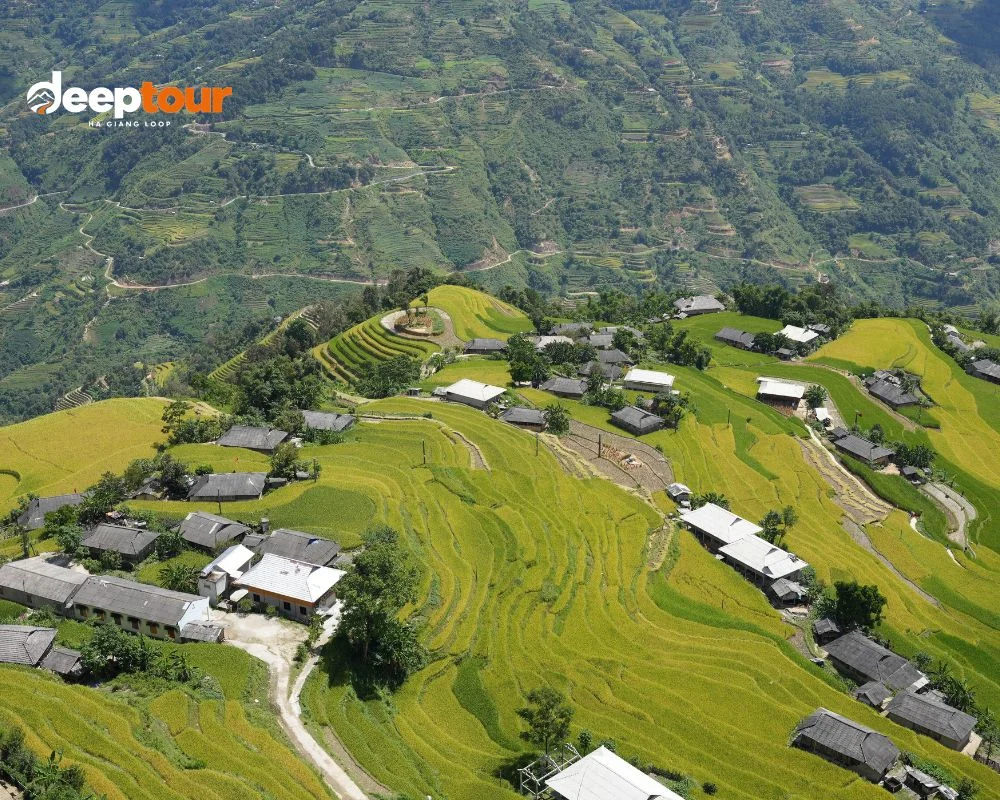
Autumn is one of the most beautiful times to visit Ha Giang, with golden rice landscapes and cooler mountain weather
Winter (December to February): Misty mountains
From December to February temperatures drop across the region, particularly in high-altitude areas such as Dong Van, Meo Vac, and Lung Cu. Early mornings can be very chilly, and thick mist sometimes covers the valleys and mountain passes.
The downside is that fog can also hide famous viewpoints and make mountain roads more difficult to navigate. In particularly cold spells some higher areas may see frost though this doesn’t happen every year.
Winter is a good time to experience a quieter side of Ha Giang, with fewer travelers outside holiday periods. You can enjoy warm meals at local homestays, explore traditional villages, and discover mountain life at a slower pace.
Just make sure you bring enough warm clothing, a thick jacket, gloves, long trousers and extra layers are particularly useful if you’re traveling by motorbike. If you dislike cold weather or don’t have much experience with mountain roads, winter may not be your favorite season.
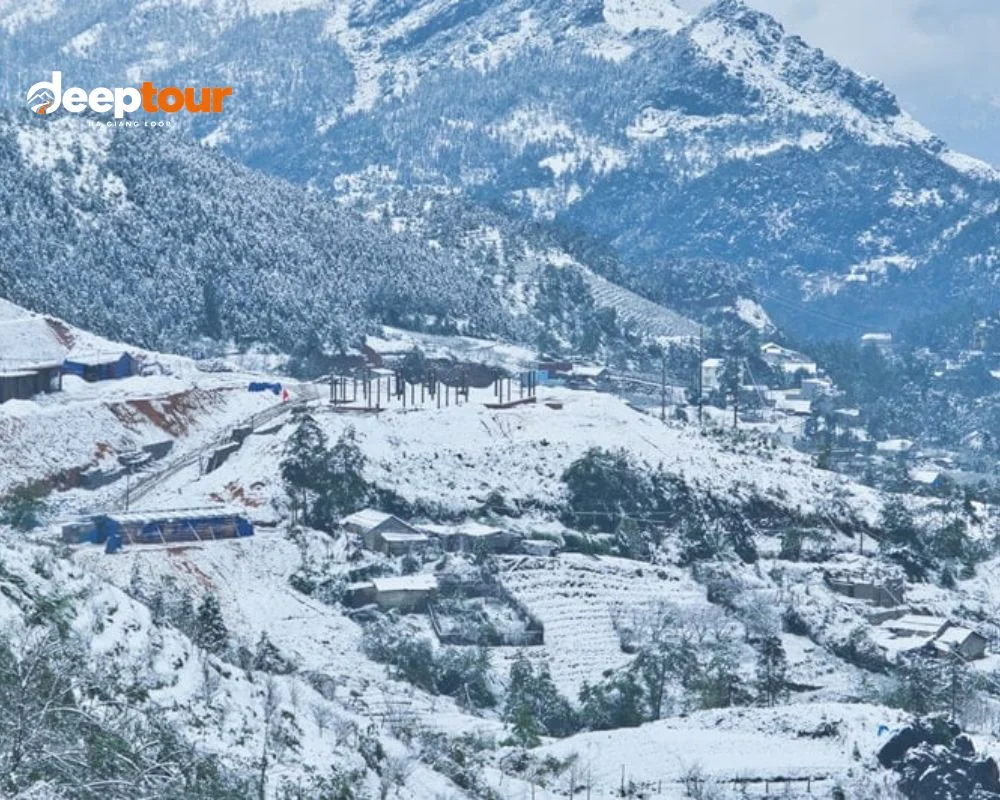
Winter brings misty mountain views, chilly mornings and a quieter atmosphere to Ha Giang
Best time to visit Ha Giang for different experiences
When to see golden rice terraces in Ha Giang
September to early October is the best time to go if you want to see the golden rice terraces. This is when the fields around Hoang Su Phi often turn golden, as the harvest is near. The terraces are terraced like the mountains and make beautiful layers of colour across the hillsides.
Early mornings and late afternoons are especially good for photography, when the light falls gently across the fields. Keep in mind that the harvest doesn’t happen on exactly the same dates every year, weather, planting schedules, and the location of individual villages all play a role. It’s worth checking with local accommodation or guides shortly before your trip.
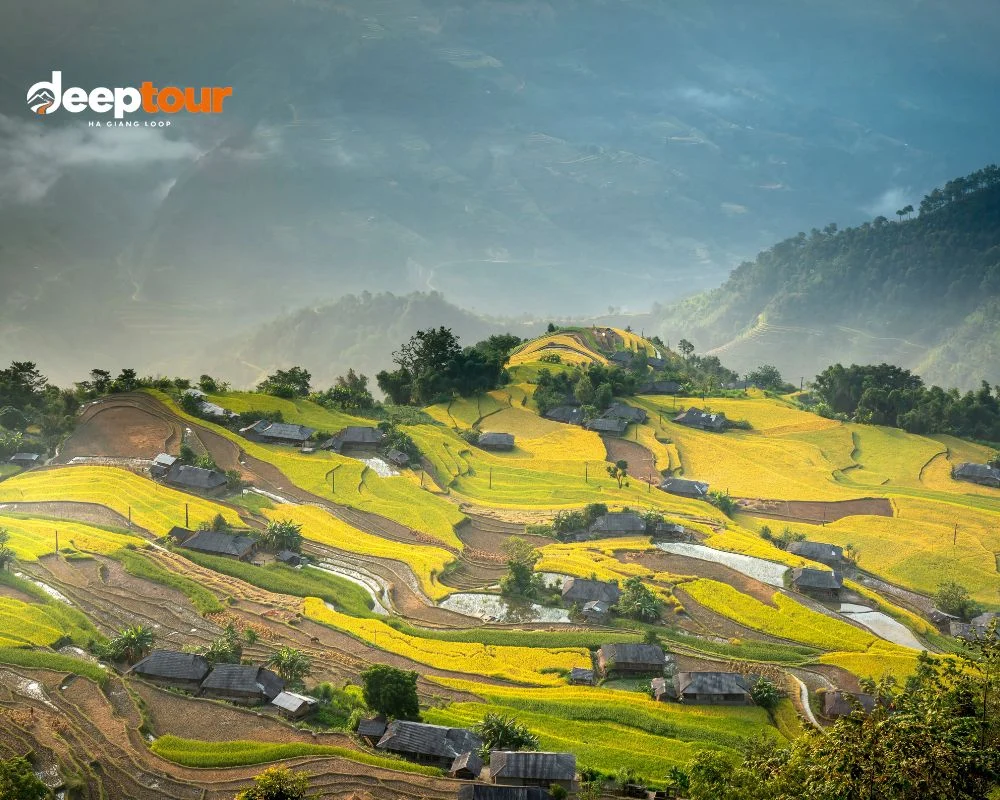
September to early October is an ideal time to admire the golden rice terraces of Hoang Su Phi before harvest
Best time for buckwheat flowers and seasonal blooms
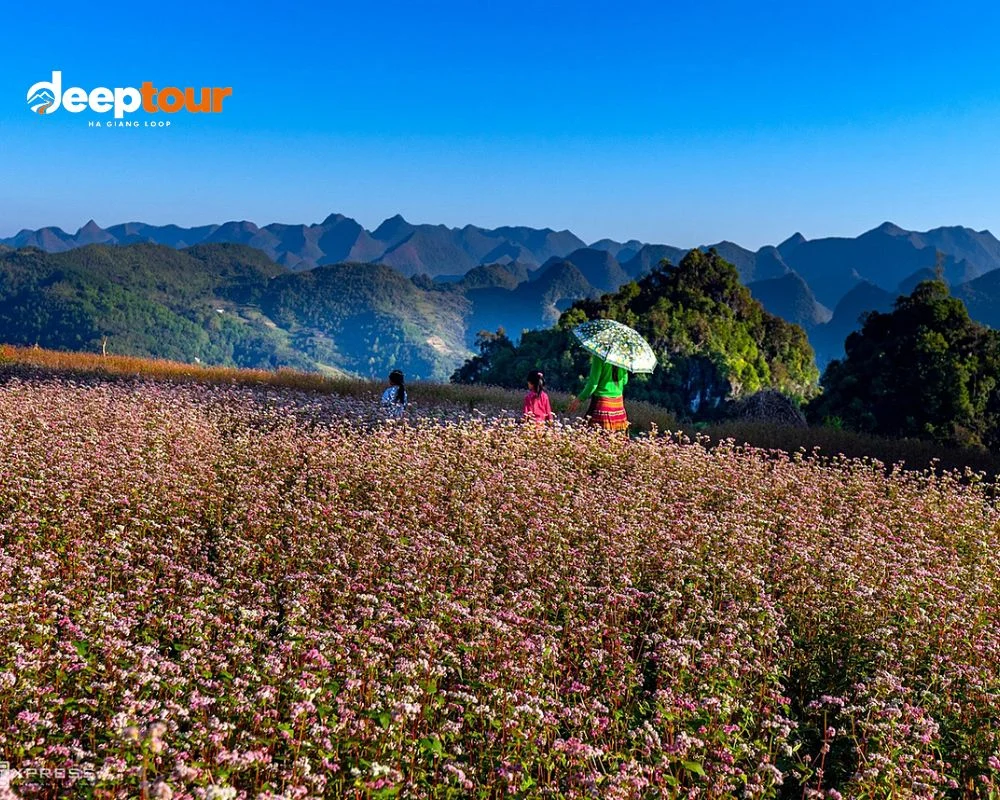
The main buckwheat flower season generally runs from October to November, though some fields may bloom earlier or continue into December. Popular areas include Sung La, Pho Cao, Lung Cu, and other parts of the Dong Van Karst Plateau. In addition, peach, plum and pear blossoms often appear around February and March, bringing soft pink and white tones to mountain villages.
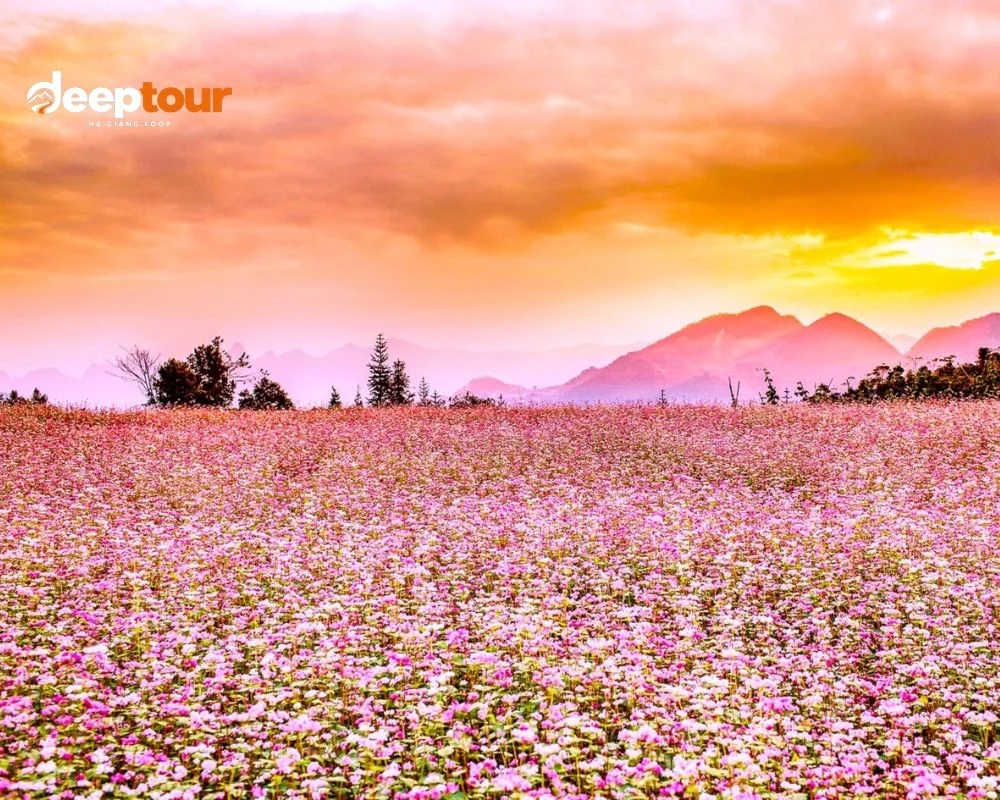
October and November are popular months to admire buckwheat flowers across the Dong Van Karst Plateau
Best months for the Ha Giang Loop adventure
If you’re planning to ride the Ha Giang Loop, March, April, October, and November are generally among the best months. During these periods the weather is often more comfortable for spending several hours on a motorbike each day.
For first-time visitors, an Easy Rider tour is a great option, you’ll travel behind a local driver who knows the roads, leaving you free to enjoy the scenery. If you’re riding independently, make sure you have the required motorcycle documents, suitable insurance and experience with challenging roads.
Avoid starting out during heavy rain, dense fog, or severe weather warnings. Whatever the month, safety should always come before sticking to a fixed itinerary.
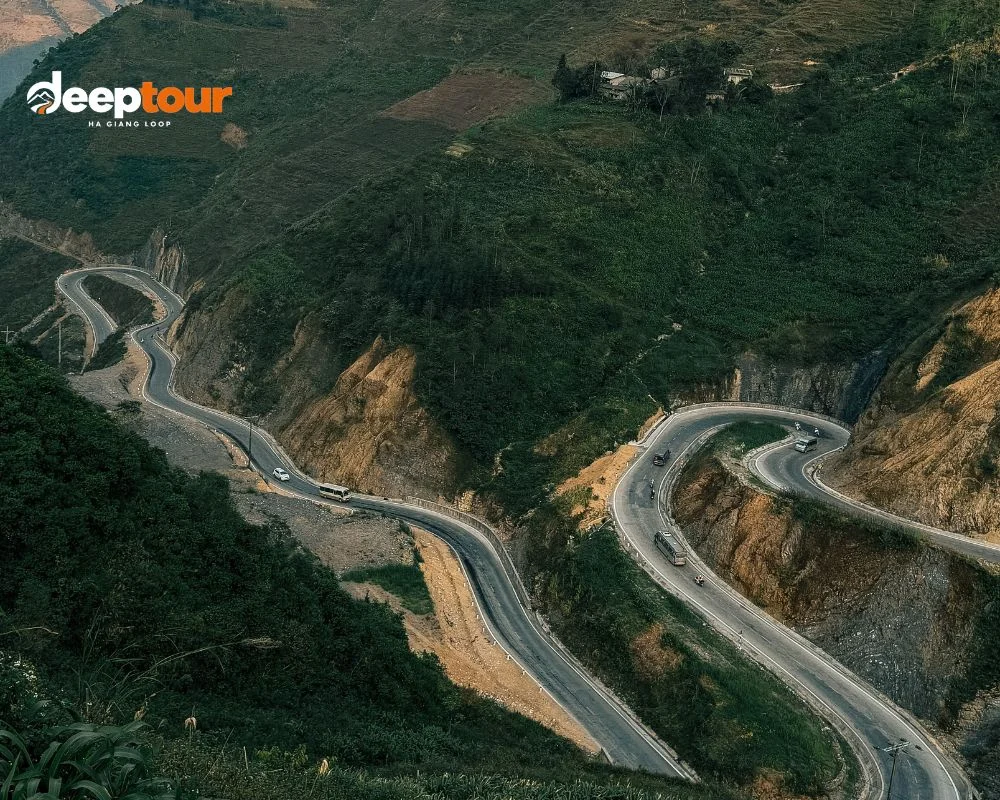
March, April, October and November generally offer comfortable conditions for exploring the Ha Giang Loop by motorbike
Best time for photography and mountain views
If you love wide mountain views and dramatic limestone scenery, March to April and October to November are good windows. These months often have clearer conditions than the height of the rainy season, though clouds and fog can still appear without much warning.
For golden rice terraces, September is a favorite among landscape photographers, particularly around Hoang Su Phi. If it’s colourful flower fields that are the priority, then October and November are generally the best months. In summer you get the deep green of the mountains and dramatic cloud formations and in winter you can get beautiful scenes of mist floating between the peaks.
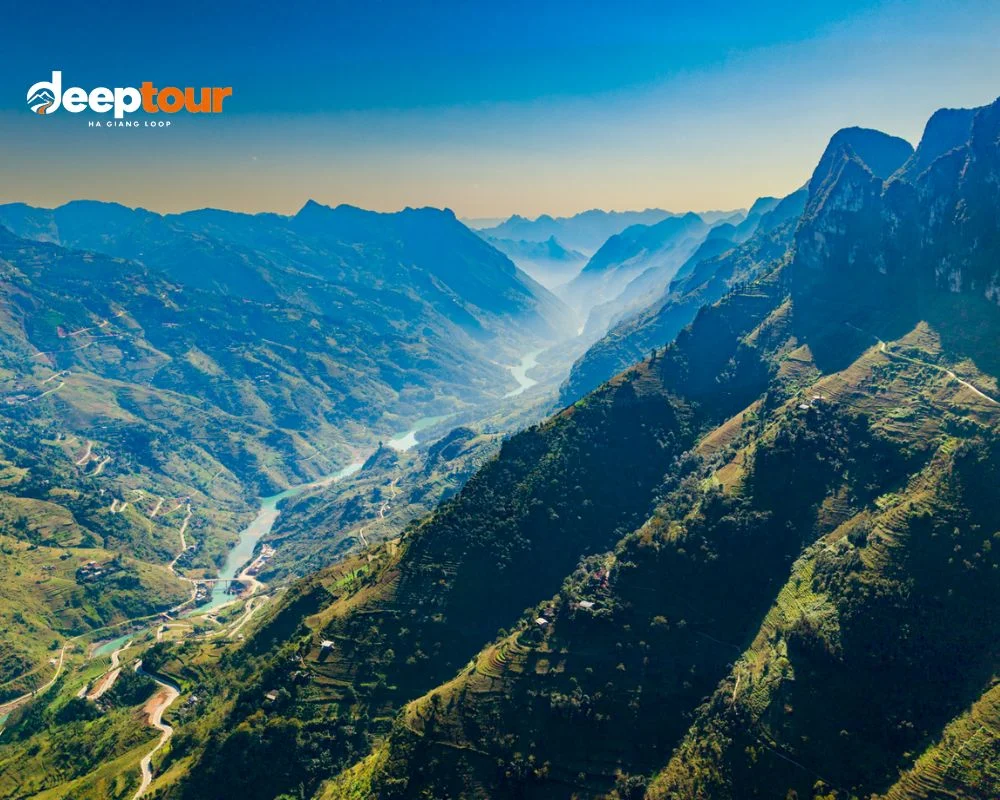
Some of the popular places for photography along the loop are Quan Ba Heaven Gate, Tham Ma Pass and Ma Pi Leng Pass.
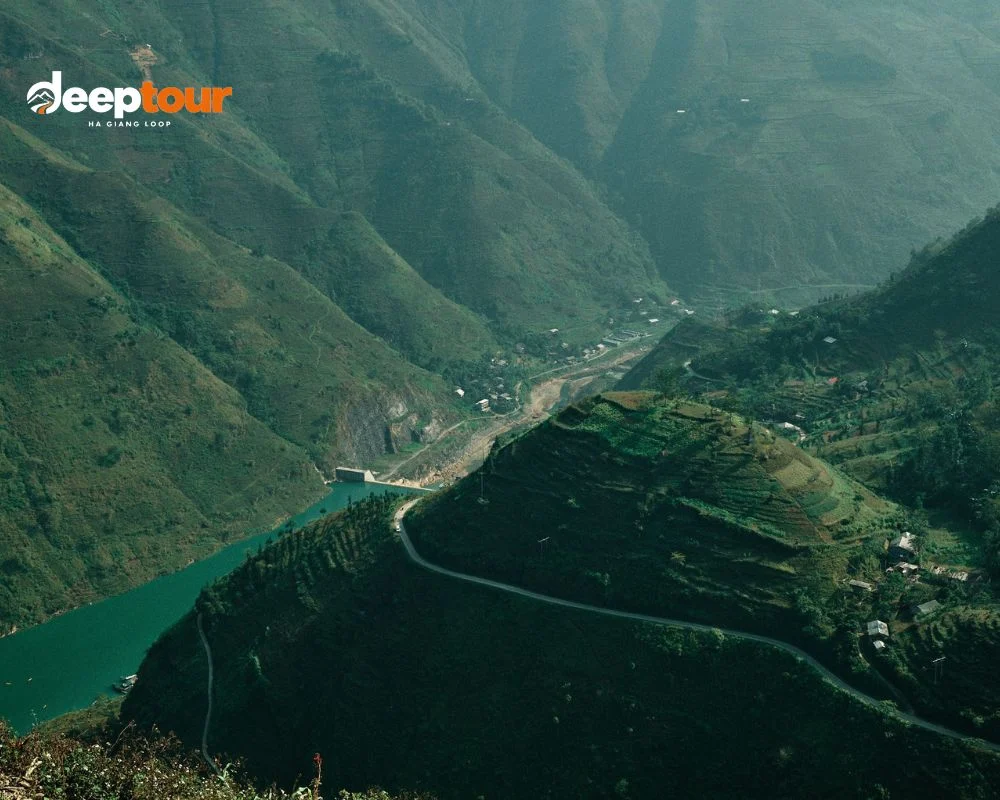
Ma Pi Leng Pass offers spectacular mountain scenery and panoramic views of the Nho Que River for landscape photography
When is the most challenging time to visit Ha Giang?
The critical period to observe is from June to August when the majority of the summer rainfall takes place in northern Vietnam. Mountain roads can become slippery in heavy rain and there is an increased risk of landslides, falling rocks and temporary road closures. Some of the Ha Giang Loop is narrow and winding and can be more difficult to ride on in poor visibility or wet surfaces.
From December to February higher mountain areas can become very cold, and thick fog may reduce visibility on the roads. If you’re not used to riding in cold or misty conditions, traveling with an experienced local driver or choosing a private car may feel more comfortable.
Plenty of people enjoy Ha Giang outside the most popular months. The key is understanding the conditions, preparing properly, and being willing to adjust your plans.
What to pack for different seasons in Ha Giang
What you pack for Ha Giang really depends on when you go, but the mountains can change the weather for you, so it’s better to be ready.
- Spring (March to May): Light clothes for warmer afternoons, jacket for cool mornings, comfortable shoes and something waterproof in case it rains.
- Summer (June to August): Light-weight, fast-drying clothing, and good rain protection. A rain jacket, waterproof bag, sunscreen and a pair of shoes with good grip will be very useful.
- Autumn (September – November): Casual wear for the daytime, a warm jacket or fleece for early mornings, evenings and the higher passes.
- Winter (December to February): Warm layers are a must.Bring a thicker jacket, gloves, long trousers, and closed-toe shoes. Windproof clothing makes a big difference if you’re traveling by motorbike.
No matter when you visit, a power bank, personal medication, sunscreen and some cash in Vietnamese dong are useful. If you’re joining a guided motorbike tour, remember you’ll be carrying your belongings on the bike, so pack light. Many operators let you leave larger luggage at their base in Ha Giang before starting the loop.

Heavy rain and thick fog can make mountain roads more challenging during Ha Giang’s rainy and winter seasons
FAQs about the best time to visit Ha Giang
Is Ha Giang worth visiting during the rainy season?
Yes, it can still be beautiful. The mountains turn deep green, the rice fields look lush, and the waterfalls are often fuller. The trade-off is the rain. Heavy showers can make the roads slippery and raise the risk of landslides or temporary closures.
Is Ha Giang too cold to visit in winter?
Not necessarily, but it can be colder than many people expect. From December to February, temperatures drop quite a bit in the higher areas, especially in the early morning and at night. Fog is also common and can reduce visibility on the roads.
What is the best time to avoid crowds in Ha Giang?
If you prefer fewer people, try late February, parts of March, or early May, outside the main holidays. These periods are often quieter than autumn, though it can vary.
There is no perfect season for everybody and that is part of what makes Ha Giang interesting. Golden rice terraces in autumn, colorful flowers in spring, green and lush valleys in summer, foggy mountains in winter… Each season has its own flavor.
Generally you can expect the best overall combination of scenery and pleasant weather in March through April or September through November. But whatever month you pick, leave a little space for unexpected stops, changing views, and the small moments that often become the best part of the trip.