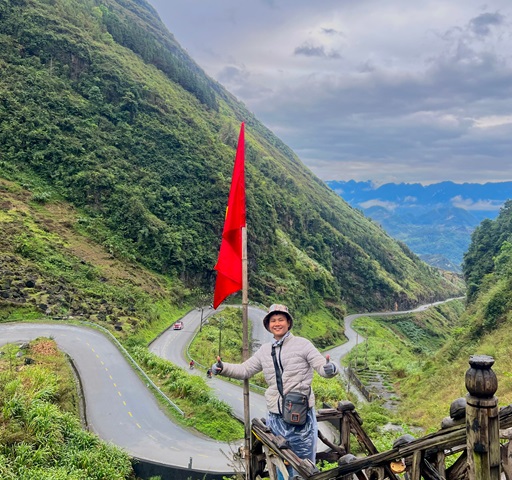
Riding the Ha Giang Loop is about more than the roads and the views. Food is part of the journey too, a way to taste the traditions and everyday life of the communities living in Vietnam’s northern highlands.
If you’re wondering what to eat along the way, this Ha Giang Loop food guide from DeepTour introduces six traditional dishes and where to look for them. Whether you’re stopping at a roadside stall, a Sunday market, or a simple local restaurant, trying the food can make the trip feel more complete.
Must-try local foods on the Ha Giang Loop
Traditional cooking is generally based on simple ingredients, slow methods and local spices. There are many dishes related to family reunions, seasonal celebrations and market days.
Here are six dishes to watch for on your travels.
Thang Co – Traditional Hmong stew
Thang Co is one of the most distinctive dishes of the Hmong communities in the northern highlands.
Traditionally it’s made with horse meat and offal, slowly cooked in a large pot with aromatic spices such as star anise, cardamom, and cinnamon. The meat becomes tender and the broth takes on a rich, strong flavor. Some places now use beef, buffalo, or pork instead.
For generations Thang Co has been linked to highland markets. On market days big pots are prepared for people coming in from nearby villages. Trying it gives you a direct taste of a tradition that has been passed down for a long time. The strong flavor and use of offal can feel unfamiliar, so if you’re unsure about the ingredients, just ask the vendor before ordering.
Where to try it: Dong Van Sunday Market and Meo Vac Sunday Market are the most reliable places. Some local restaurants also serve it, though recipes and availability vary.
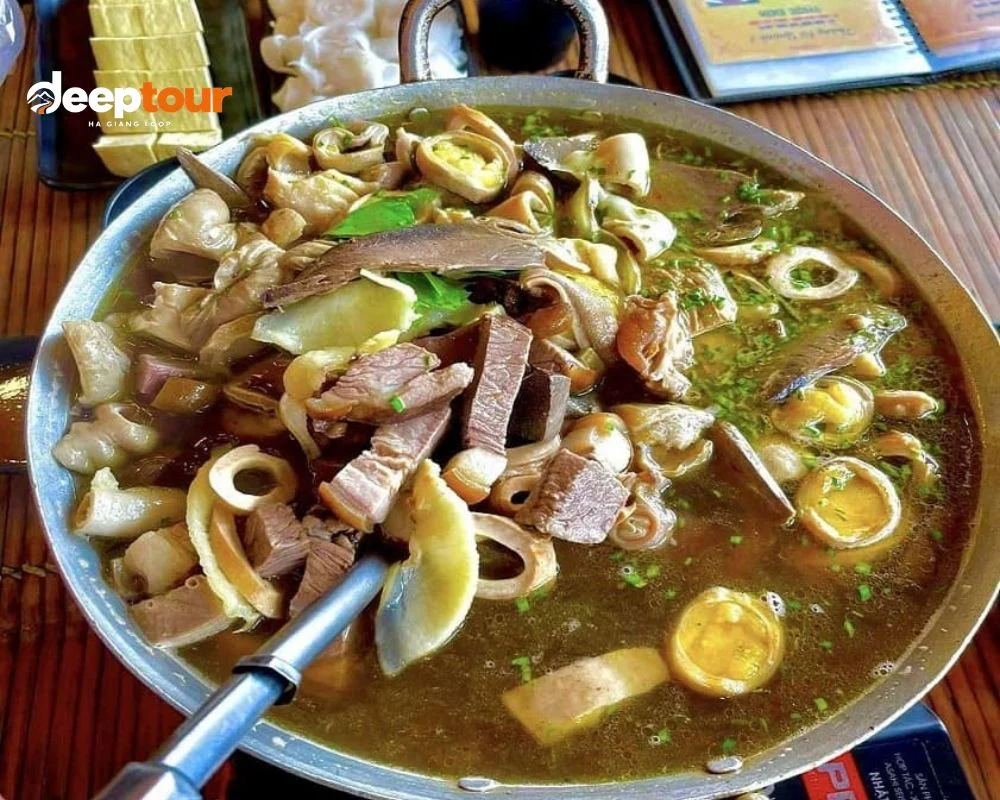
A steaming pot of Thang Co is a familiar sight on market mornings, bringing people together over one of the highlands’ boldest flavors
Men Men – Steamed cornmeal
Men Men is a traditional Hmong food made from ground corn and is closely tied to daily life on the Dong Van Karst Plateau.
In the rocky highlands, where growing wet rice is hard, corn has been a staple for a long time. Men Men is made by grinding dried corn into coarse meal, moistening it and steaming it, often more than once until it reaches the right texture. The finished dish is slightly crumbly with a mild corn flavor.
It’s usually served simply, with vegetable soup, meat, or other side dishes. If you’re used to rice or noodles, Men Men is a quiet but interesting introduction to a food that has fed local households for generations.
Where to try it: Local markets and Hmong homestays around Dong Van, Meo Vac and nearby mountain villages.
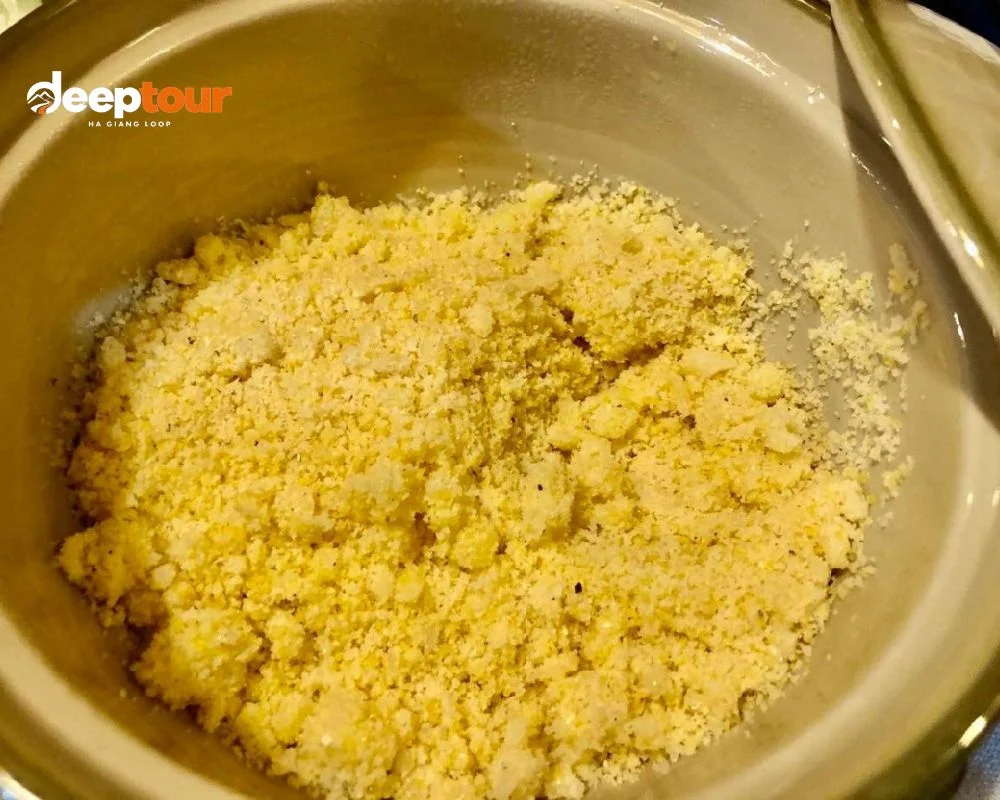
Simple ingredients, generations of tradition. Men Men shows how corn became an essential part of life in the rocky highlands
Au Tau porridge – A Ha Giang specialty
It is made from ấu tẩu (a kind of aconite root), rice, broth and other ingredients. Traditional versions are often made with pork, eggs, herbs and seasonings, resulting in a thick porridge that is rich in taste with a faint bitterness at the end.
If not processed correctly, the root is poisonous so local cooks have traditional methods they employ before using it. For safety, only eat Au Tau porridge prepared by experienced cooks at reputable places (Never try to prepare the root yourself).
Despite its unusual ingredients, the porridge has become part of Ha Giang’s culinary identity. It’s often served in the evening rather than at breakfast. After a long day on the roads, a warm bowl can be a distinctive way to end the day.
Where to try it: Established eateries in Ha Giang City and Dong Van. Evening food stalls and places that specialize in the dish are good places to ask.
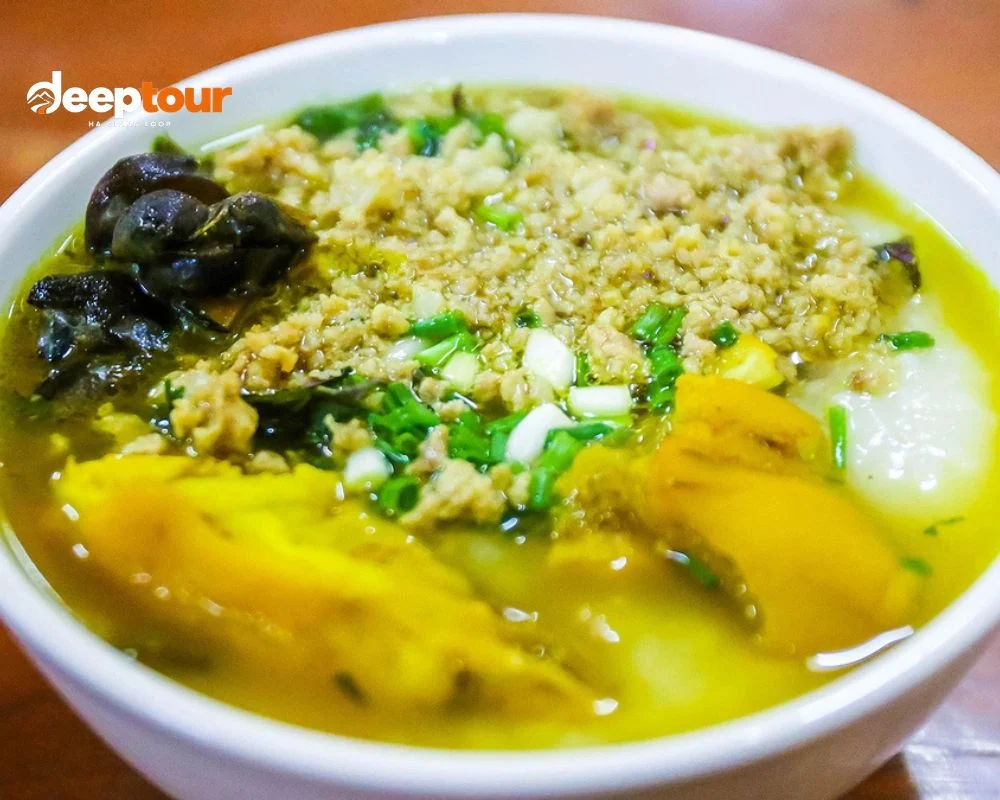
After hours on mountain roads, there’s something especially comforting about sitting down to a warm bowl of local porridge
Banh Cuon – Vietnamese steamed rice rolls
Banh Cuon is familiar across Vietnam, but the version commonly served in Ha Giang has its own local character.
Thin sheets of steamed rice batter are usually filled with minced pork and wood ear mushrooms. Some versions also include an egg cooked inside the delicate sheet. In many parts of the country it’s served with seasoned fish sauce. In Ha Giang, especially around Dong Van, it’s often paired with a warm pork bone broth that may contain herbs, spring onions, or pieces of Vietnamese pork sausage.
Where to try it: Ha Giang City and Dong Van Old Quarter are reliable spots for breakfast. Look for small local places preparing the rolls fresh in the morning.
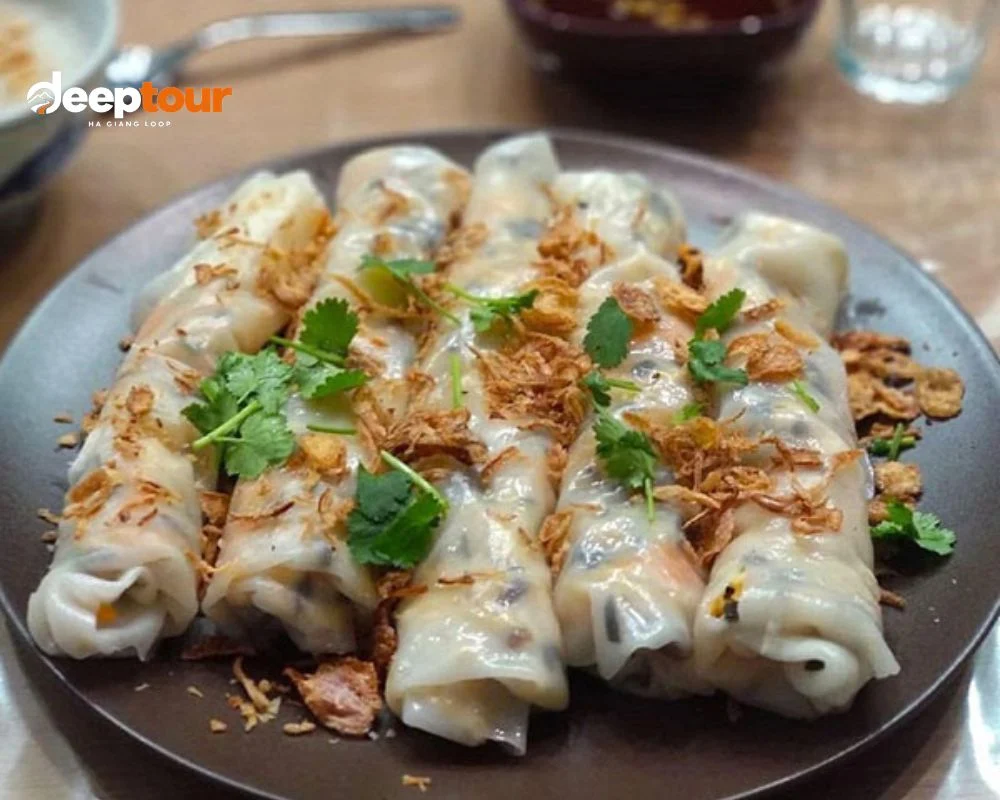
Forget the usual dipping sauce. In Dong Van, these delicate rice rolls come with a bowl of hot broth, perfect for a chilly morning
Buckwheat cake – A traditional highland snack
Ha Giang is well known for its buckwheat flowers, which turn parts of the Dong Van Karst Plateau pink, white and purple during the flowering season (The seeds are also used for food). Buckwheat cake is made by grinding the seeds into a flour, mixing with other ingredients and water, then shaping the mixture into small cakes and steaming or grilling them, depending on the local recipe.
The flavor is mild and slightly nutty, with a texture different from ordinary wheat cakes. It’s usually eaten as a snack rather than a full meal. For visitors it’s another small window into how local communities use the crops that grow in these mountains.
Where to try it: Markets in Dong Van and Meo Vac, and seasonal stalls near buckwheat-growing areas such as Sung La (Availability changes throughout the year).
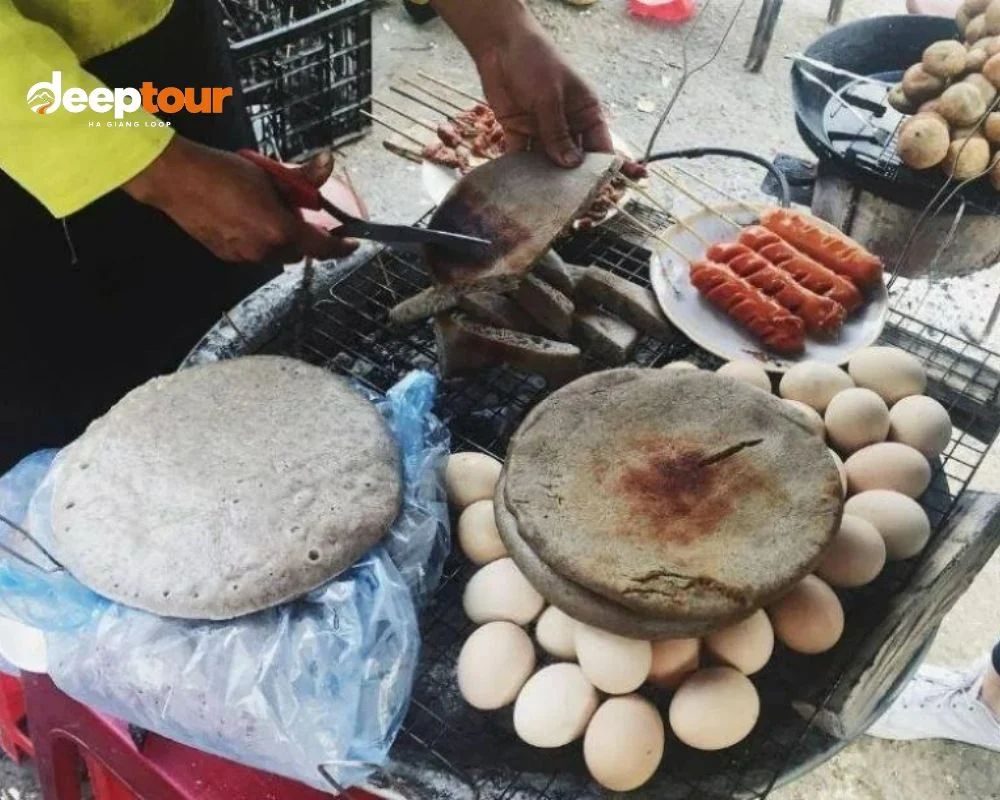
Those beautiful buckwheat flowers aren’t just for photos. Their seeds also find their way into a humble mountain snack
Five-color sticky rice – A colorful local dish
One of the most eye-catching traditional dishes of the northern mountains is five-color sticky rice (xôi ngũ sắc).
Glutinous rice is colored with natural dyes from leaves and plants, traditionally yielding five colors often red, yellow, green, purple or dark blue and white.
The dish is an integral part of the culinary heritage of a number of ethnic groups, especially during festivals, celebrations and family reunions. Preparation takes time soaking the rice, naturally colored and steamed till soft and fragrant. It has a chewier texture than regular rice with a subtle natural sweetness. It can be eaten by itself or with other foods.
Where to eat: Traditional markets, Tay community homestays and some local eateries (Availability: Depending on season and celebrations).
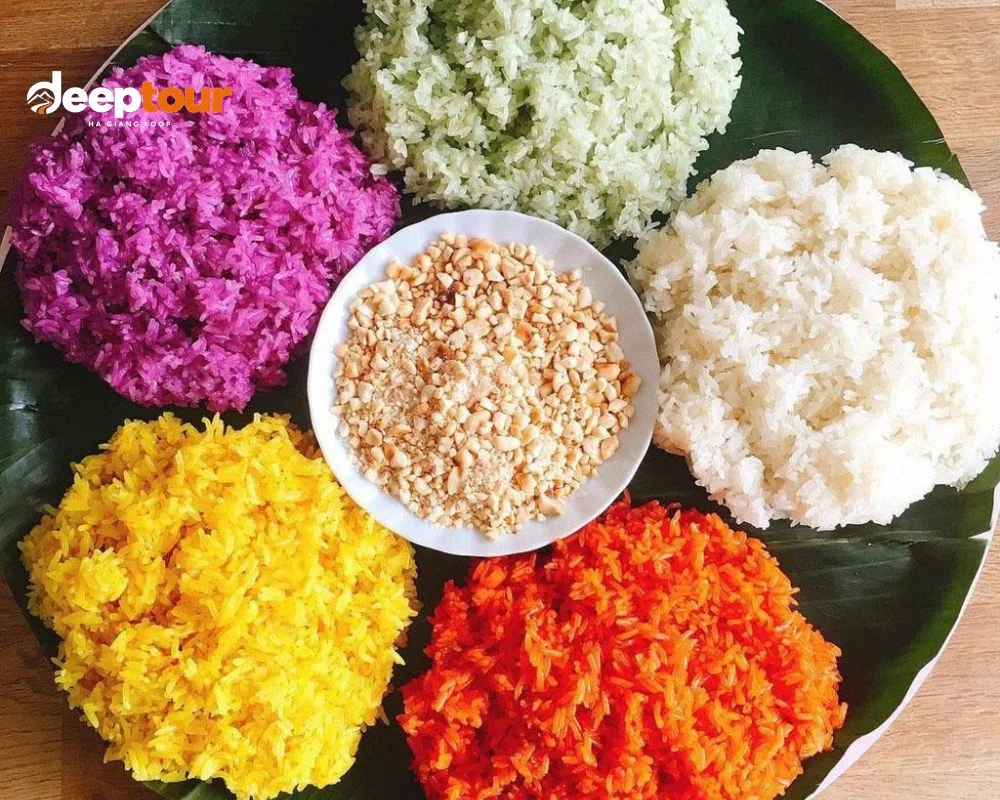
Five colors, one traditional dish. Each vibrant shade comes from natural ingredients, adding a little color to highland celebrations
Where to eat along the Ha Giang Loop
Food is found in small family-run eateries, traditional markets and homestays, rather than in the major Vietnamese cities. Some places focus on local specialties, others serve simple rice meals, noodle soups and home-cooked food for people passing through.
Local food in Quan Ba and Yen Minh
Quan Ba and Yen Minh are common stops on the first stretch of the Loop. Quan Ba has agricultural roots and connections with Hmong food traditions, including corn-based dishes like Men Men.
For breakfast, pho from the Trang Kim area is worth looking for, the noodles are made locally and the broth is flavorful.
In Yen Minh you’ll find small restaurants serving everyday Vietnamese food: rice with meat and vegetables, noodle soups and other simple meals. These are practical lunch stops before continuing toward Dong Van.
Traditional dishes in Dong Van
Surrounded by the limestone landscape of the Dong Van Karst Plateau, the town has a traditional market, an old quarter and a mix of communities.
Banh Cuon with warm bone broth is a good breakfast choice. Small eateries in and around the old quarter prepare the rolls fresh, often with pork, mushrooms or egg. The soft rolls and hot broth work especially well on cool mornings.
Dong Van is also a solid place to look for Au Tau porridge in the evening. The slightly bitter flavor and rich texture set it apart from more familiar rice dishes.
If your timing coincides with a Sunday, Dong Van Sunday Market is a highlight. People from surrounding villages gather to trade, meet, and eat. Depending on the vendors you may find Thang Co, Men Men, buckwheat cakes and other regional specialties.
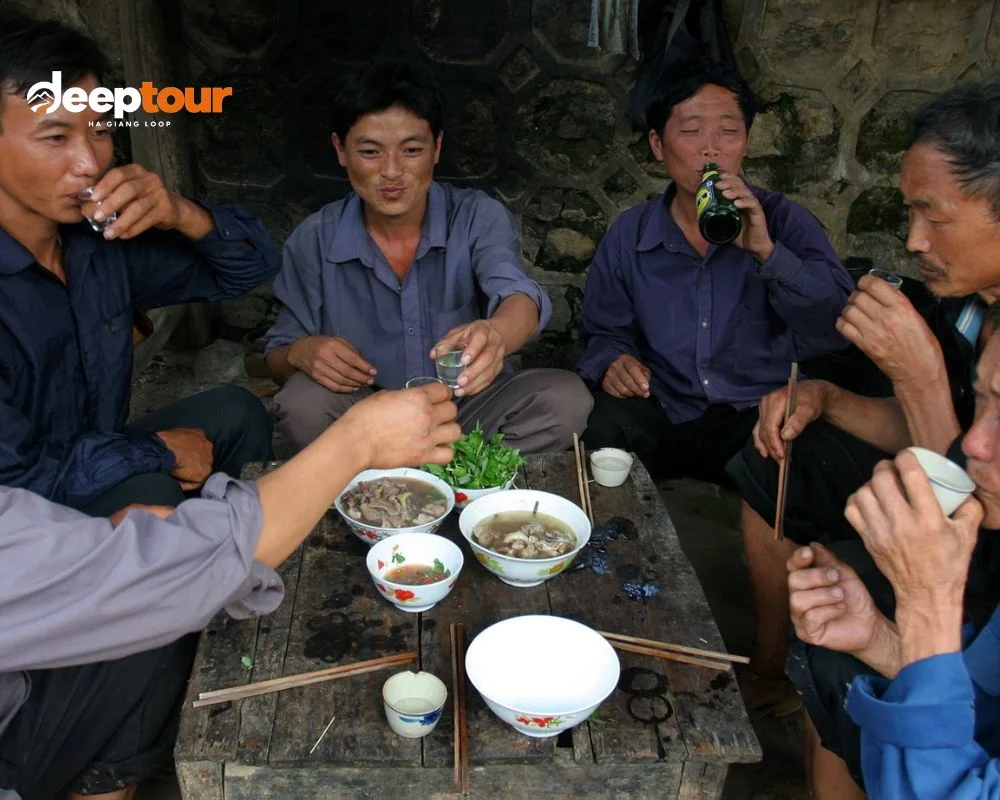
Sunday mornings bring Dong Van to life, with market stalls, familiar faces and the smell of freshly cooked food filling the air.
Food experiences in Meo Vac and Du Gia
Meo Vac sits beyond Ma Pi Leng Pass and is best known for its Sunday market. People from surrounding villages come to trade produce, clothing, household goods and food. Thang Co is one of the dishes most closely associated with the market, large pots are traditionally prepared for the day and eating among local residents gives a direct sense of the area’s food culture.
Men Men and other corn-based foods are also common among the Hmong communities here. If your itinerary includes a Sunday in Meo Vac, the market is worth planning around. On other days small restaurants serve rice dishes, noodle soups and local meals.
Staying at a local homestay is one of the best ways to experience the food. Dinners are often family-style, with several dishes placed around the table. Depending on the household and what’s available, you could have steamed rice, seasonal vegetables, stir-fried dishes, pork, chicken, tofu or other local dishes. Some homestays can arrange vegetarian meals if you ask in advance.
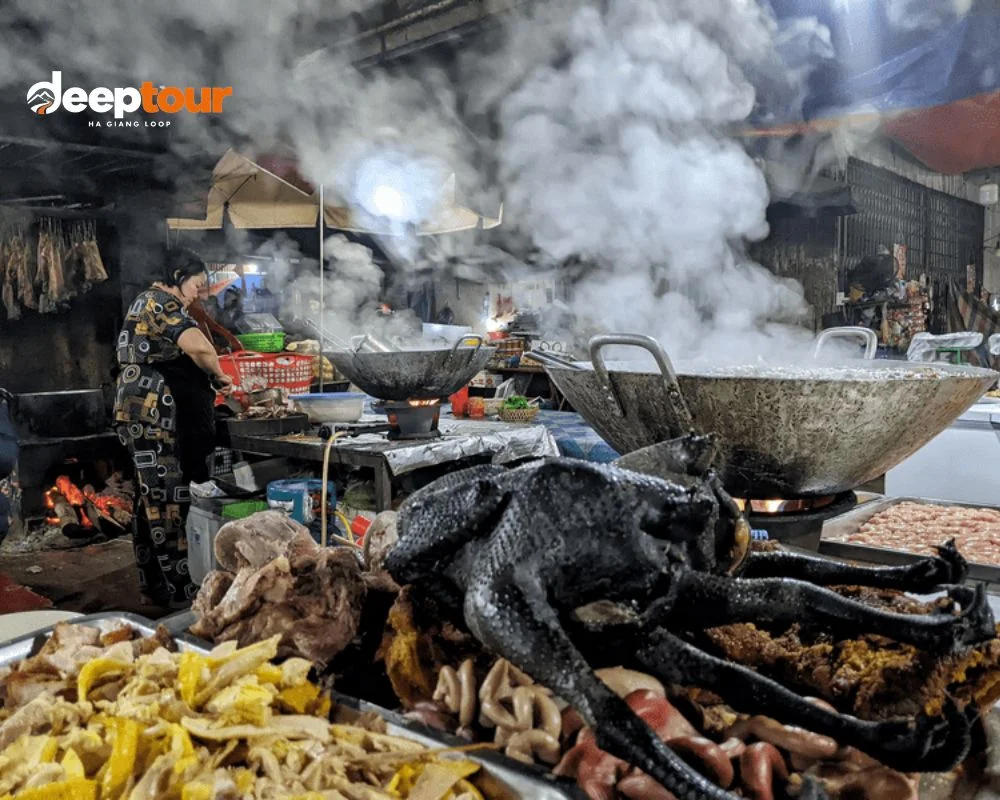
Big pots bubbling over open flames, steam filling the air and vendors busy preparing food
From the rich flavors of Thang Co and the simplicity of Men Men to warm Au Tau porridge, freshly steamed Banh Cuon, buckwheat cakes, and colorful sticky rice, each dish reflects a different part of the region’s traditions.
At DeepTour we believe discovering Ha Giang is not only about the viewpoints. It’s also about the meals, the local customs, and the small experiences that make each trip feel different. We hope this guide helps you know what to look for and where to find it. Wherever you stop, leave a little room to try something new.