Ha Giang is famous for its mountains, winding roads, and big views. But the scenery is only half the story. The region is also home to many ethnic communities whose traditions still shape everyday life in the northern highlands, from the houses people live in and the clothes they wear to the markets, music, and festivals that mark the year.In this guide, DeepTour looks at the main ethnic groups, their customs, festivals and local food, the things that give Ha Giang its character beyond the views.
Ethnic communities in Ha Giang
Ha Giang is one of the most culturally diverse parts of northern Vietnam. Over the years it has been home to many ethnic groups, including the H’Mong, Tay, Dao, Nung, Lo Lo, Giay, Pa Then, Pu Peo, and La Chi. Each group brings its own language, clothing, architecture, and customs to the region.The H’Mong form one of the largest communities, especially in the higher areas around Dong Van, Meo Vac, Yen Minh, and Quan Ba. Many H’Mong villages sit at high altitude, where people have long farmed on rocky ground. Their culture is closely tied to traditional crafts, music, festivals, and family life.
The Tay usually settle in the lower valleys where wet-rice farming is possible. They’re known for wooden stilt houses, indigo clothing and then singing. Near Ha Giang City, villages like Thon Tha and Ha Thanh still keep much of that traditional architecture and rural rhythm.
Dao communities are another important part of the picture. Different Dao groups have their own styles of clothing and customs. The Red Dao stand out for their detailed embroidery, bright red headwear, and the spiritual ceremonies that remain central to their life.
Around Lung Cu and Lo Lo Chai Village, the Lo Lo people are known for their colorful traditional clothing, ancestral rituals and distinctive textile patterns, some of the most eye-catching in the northern highlands.Smaller groups such as the Pa Then, Pu Peo, and La Chi also keep their own traditions, many of them tied to farming cycles and spiritual beliefs.
Even villages of the same ethnic group can differ in clothing, ceremonies, language and daily habits.
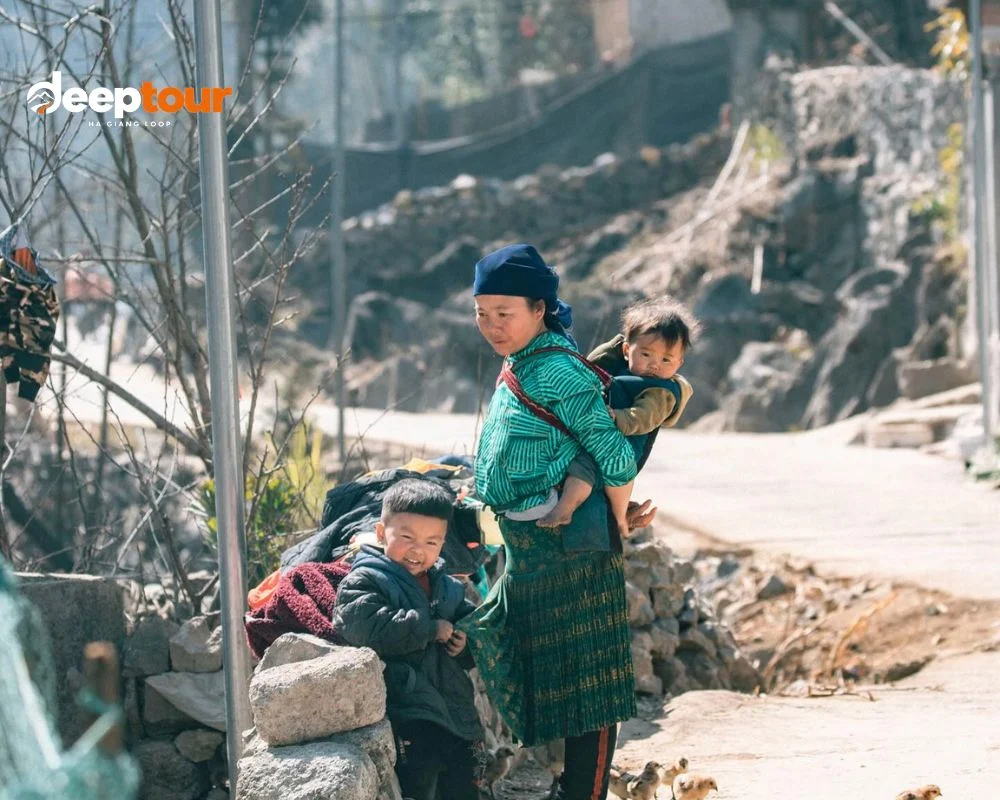
Different languages, clothing and customs, all woven into the everyday life of Ha Giang’s mountains
Traditional customs and daily life in Ha Giang
Agriculture is still at the heart of most rural families. People grow rice, corn, vegetables and other crops depending on the altitude, climate, and how much usable land they have. In the lower valleys, wet-rice farming is common. Up on the rocky Dong Van Plateau, communities have found ways to plant in the small patches of soil between the limestone.
Daily life still follows the farming seasons, planting, harvesting, preparing food, looking after animals. Family ties, respect for ancestors, and helping one another in the community continue to matter.
Schools, technology, tourism, and new ways of earning a living are part of everyday life now. Traditional customs sit alongside these changes, creating a mix of old and new.
Traditional houses and architecture
Different communities have developed styles that fit the climate, the materials they can find, and their daily needs.
In many H’Mong villages, traditional houses are made with rammed earth, soil packed tightly into thick walls. Known locally as Trinh tuong (earthen) houses, these houses are common across the Dong Van Karst Plateau. The solid walls help keep out the cold mountain air, while tiled roofs and stone fences give the villages their distinctive look. You can still see good examples in places like Pho Cao, Sung La and around Dong Van.
Tay communities often live in wooden stilt houses, particularly in the valleys. The houses are raised on pillars so the living space sits above the damp ground; the area underneath is used for storage or other practical purposes. Thon Tha Village, near Ha Giang City, is a good place to see these houses in a peaceful rural setting.
Lo Lo communities also have traditional houses that combine earthen walls, wooden structures, and tiled roofs. Details vary from village to village depending on local materials and building habits.
Remember that many of these houses are still private homes. Always ask before entering residential areas or photographing the inside.
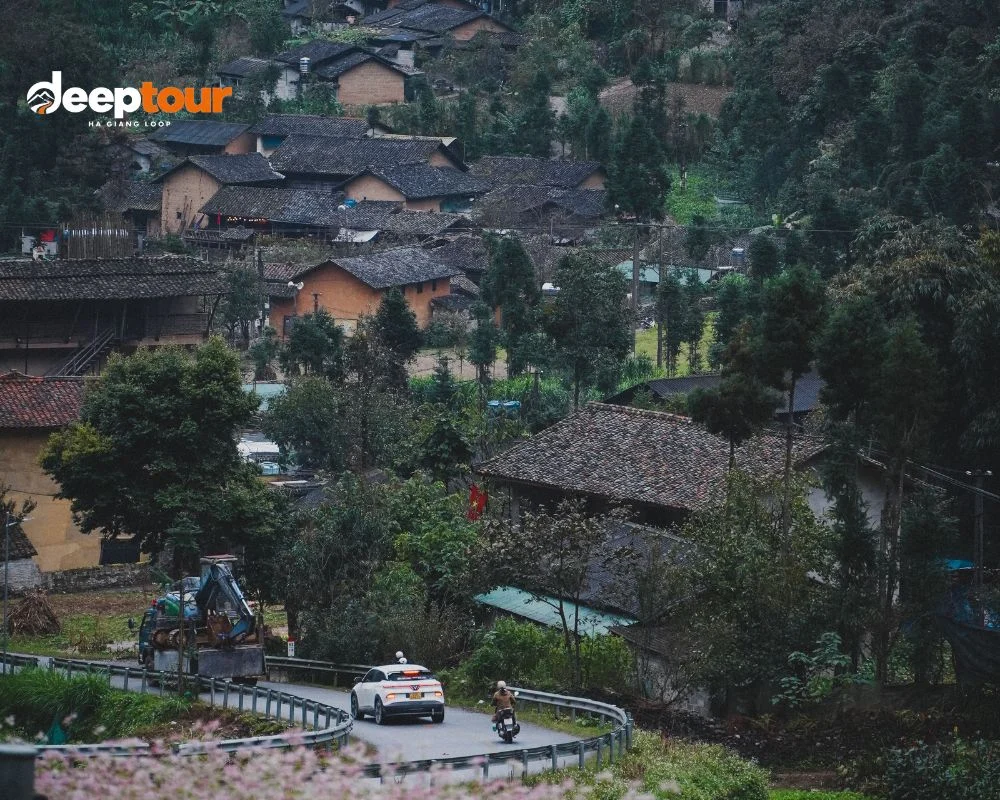
Built for mountain life, these homes tell you a lot about how local families have adapted to their surroundings
Ethnic clothing and traditional crafts
Each group has its own fabrics, colors, patterns, and techniques. H’Mong clothing often stands out for its elaborate embroidery, indigo-dyed cloth, hemp weaving, and batik work. Depending on the community, you might see pleated skirts, embroidered jackets, decorative belts and bright headwear.
The Red Dao are known for detailed embroidery and distinctive red headdresses, often with geometric patterns and careful stitching. Tay clothing is usually simpler, indigo or dark fabrics with quieter designs. Lo Lo clothing tends to be more colorful, with bright pieces arranged into complex geometric patterns.
Beyond clothing, basket weaving, woodwork and traditional instrument making are also part of the region’s craft heritage. If you want a souvenir, look for pieces that are actually made locally rather than mass-produced copies. Supporting artisans helps keep the skills alive and brings income to the communities.
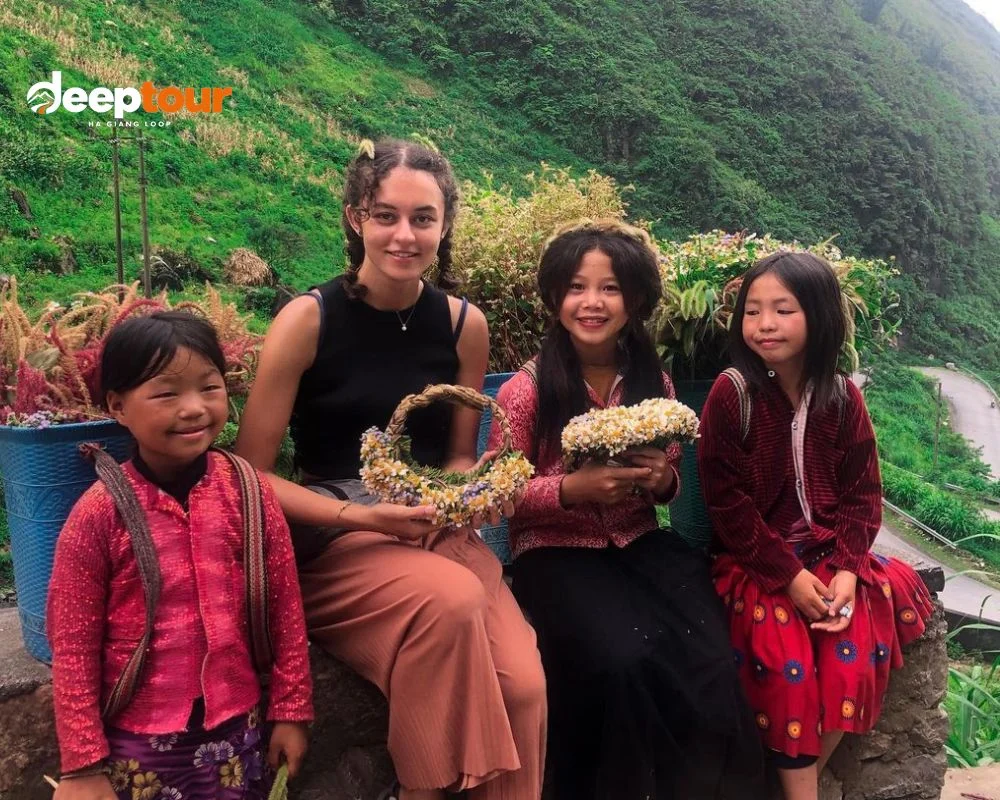
Look a little closer at the stitching. Behind those bright patterns are skills passed down through generations
Folk music and cultural traditions
Songs and instruments are part of celebrations, spiritual ceremonies, storytelling sessions and gatherings. One of the most recognizable instruments is the H’Mong khen, a set of bamboo pipes attached to a wooden chamber. It produces a distinctive sound and is often played with movement or dance during festivals and social occasions. For H’Mong communities, the music can carry meaning beyond entertainment.
Then singing is another significant tradition, associated mainly with Tay and Nung communities (and Thai communities elsewhere in Vietnam). It combines singing, instrumental music, and spiritual elements. The đàn tính, a traditional stringed instrument, often accompanies the performances. In 2019, UNESCO recognized the Practices of Then by the Tay, Nung and Thai ethnic groups of Vietnam as an Intangible Cultural Heritage of Humanity.
Traditional music may also be accompanied by dancing, folk games or other activities depending on the occasion. Some performances take place at public events, others remain private family or religious ceremonies.
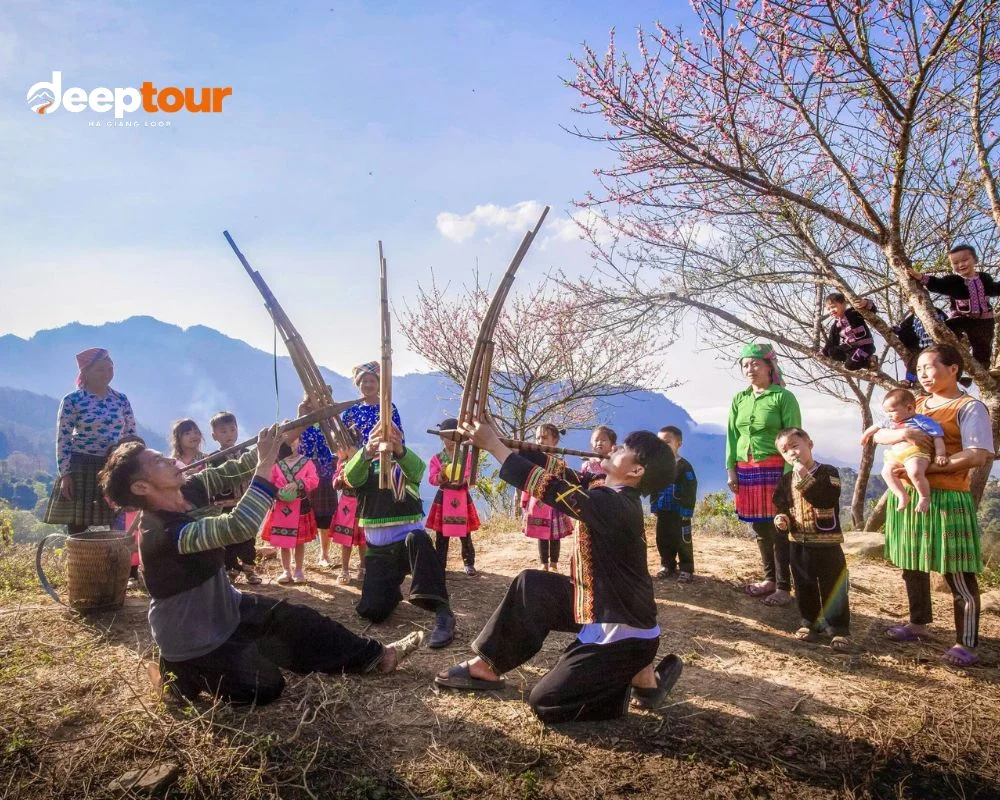
More than just music, the sound of the H’Mong khen carries stories, emotions and a strong sense of community
Traditional festivals and rituals in Ha Giang
Long Tong Festival
For the Tay people, the Long Tong Festival (often called the Going to the Field Festival) is one of the most important events of the year.
It usually takes place early in the lunar new year and marks the start of a new farming cycle. Communities gather to hope for good weather, a successful harvest and a better year ahead. In Ha Giang the exact dates and activities can differ from one village to another.
The festival is typically held in a communal space or an open field. There are ceremonies with offerings to ancestors and spiritual figures linked to farming. After the rituals, the mood becomes more lively music, games and shared meals. One popular game is ném còn, where people throw colorful cloth balls at a hanging target. Tug of war and traditional performances are also common.
For visitors, Long Tong is a clear look at how farming, spiritual beliefs and community life still connect.
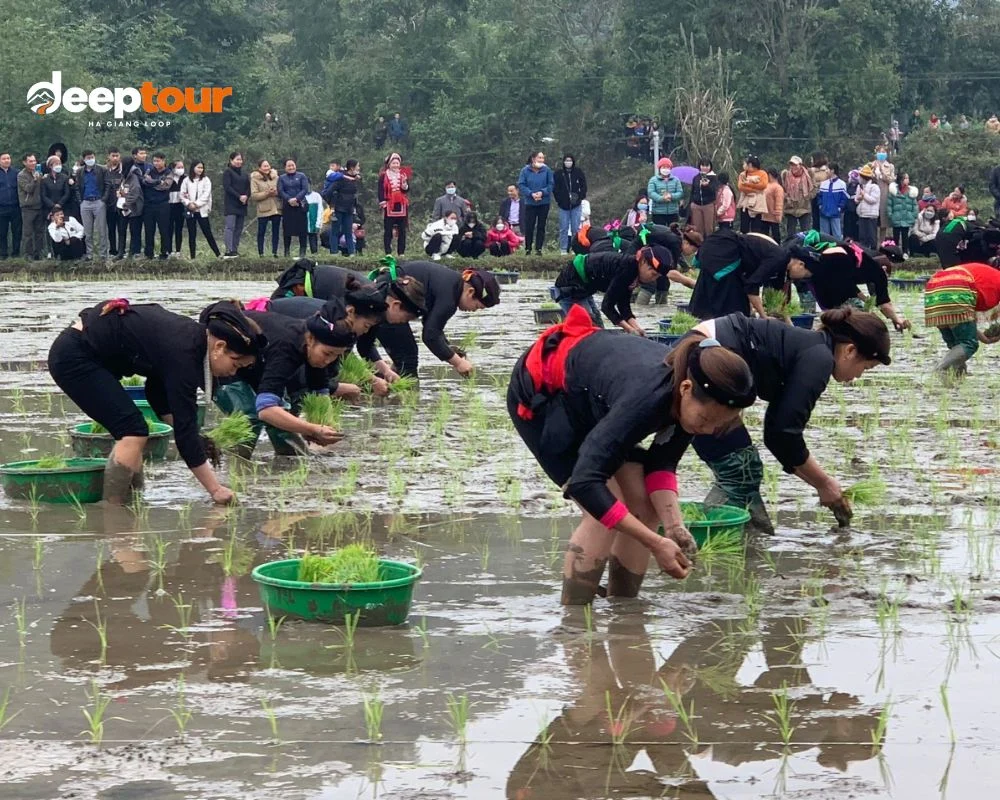
A new farming season brings people together, with shared hopes for good weather, healthy crops and a prosperous year
Khau Vai Love Market Festival
It takes place in the Khau Vai area of Meo Vac around the 26th and 27th days of the third lunar month. Unlike regular markets that focus on buying and selling, Khau Vai has long been linked to love, relationships, and reunions.
Local legend tells of a young couple whose families didn’t approve of their relationship. Unable to stay together, they promised to meet once a year. Over time that story became tied to the annual gathering. Traditionally it was a place where people could see former partners again, reconnect with old friends, and share memories. People from different ethnic communities also come, which adds to the atmosphere.
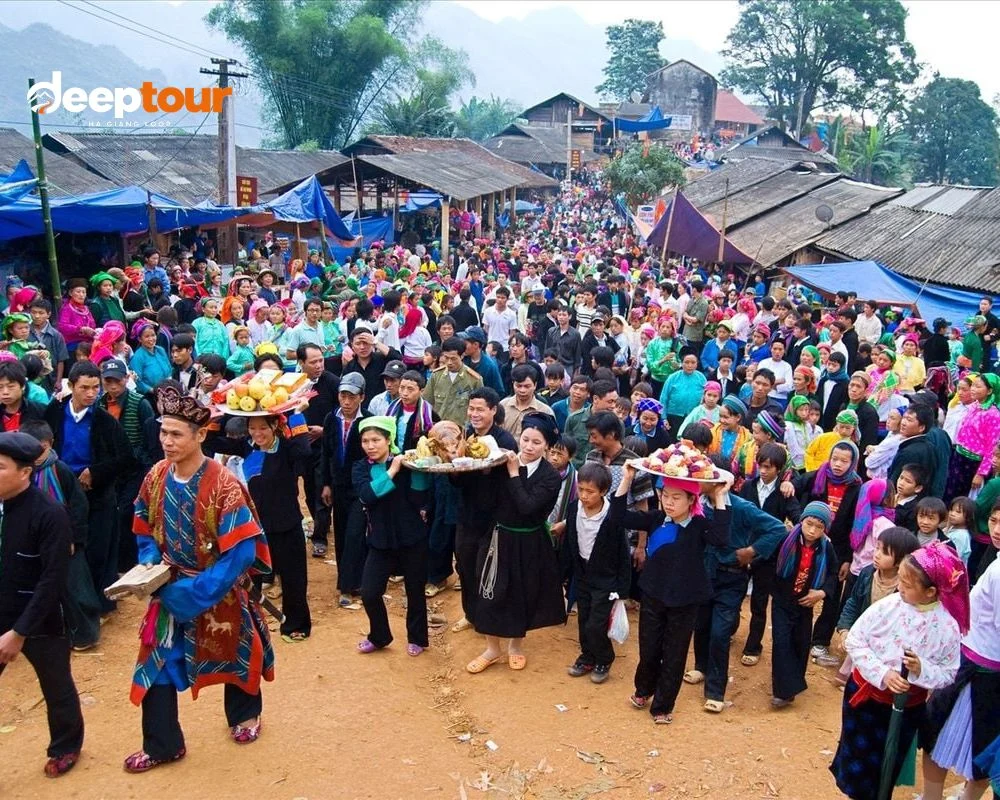
Not every market is about buying and selling. Khau Vai has long been a place for old connections and reunions
Cap Sac Ceremony of the Red Dao
The Cap Sac Ceremony is one of the most important spiritual rituals in the life of Dao men, including those in the Red Dao community.
It is often described as a coming-of-age or initiation ceremony. Completing it marks recognition as a mature member of the community with new spiritual and social responsibilities. In traditional Dao belief the ceremony is also linked to ancestors, spiritual protection and a person’s place within the wider community.
It is typically conducted by experienced ceremonial specialists and may include prayers, offerings, symbolic actions and chanting of sacred texts. This process can take a long time and can involve family members, depending on local tradition. Participants may receive ritual names or recognition of their new status.
Cap Sac is not a public festival or a performance for tourists. It is a meaningful religious ceremony. Visitors should never assume they can attend or photograph it. If a family or community chooses to welcome outsiders, follow their instructions carefully and do not interrupt the rituals.
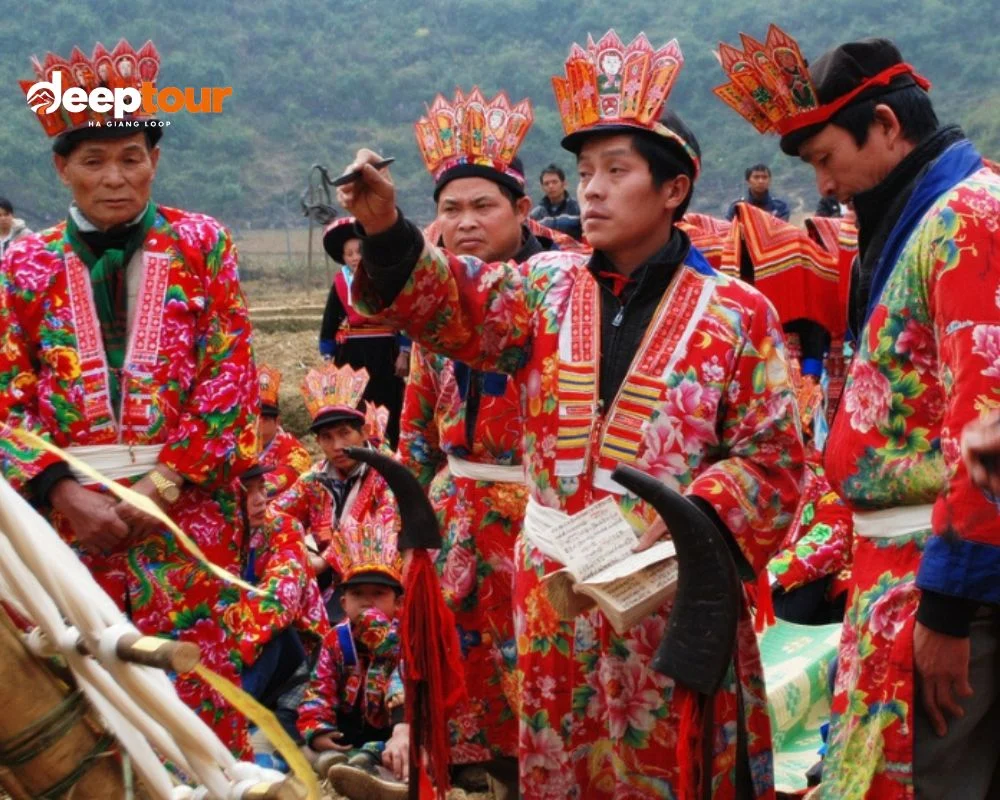
Some traditions are deeply personal. For Dao families, Cap Sac marks an important step in spiritual and community life
Fire Dancing Festival of the Pa Then people
It is rooted in beliefs about fire, protection and the relationship between people and nature. The ceremony is often held after the harvest, though the exact timing can differ from place to place. A ceremonial specialist begins with prayers and rituals to ask for permission and protection. Once the fire has burned down to glowing embers, the chosen participants dance across them.
In Pa Then tradition this is an act of faith and courage, and a way of connecting with protective forces.
Even though the dancing looks dramatic, it is not a show or a physical challenge for visitors. The ceremony carries real meaning and is performed within a long-standing ritual context. Only watch if the community welcomes you, follow any safety instructions and never try to copy the fire dancing yourself.
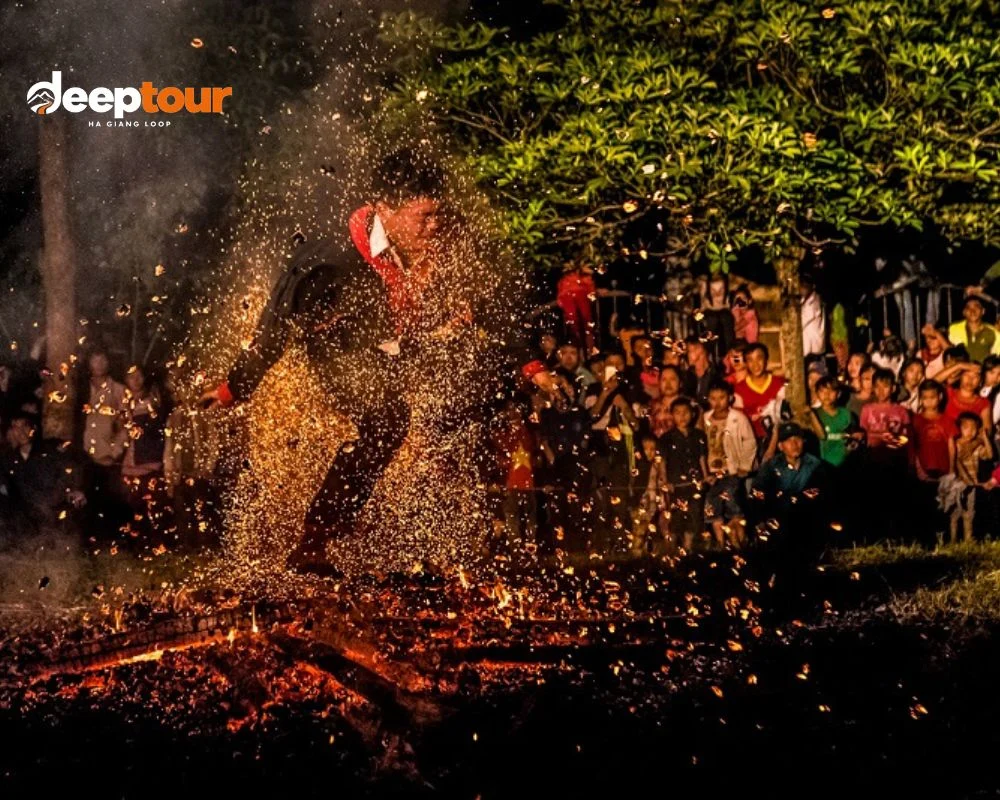
When the flames settle into glowing embers, a remarkable tradition of faith, courage and protection unfolds
Local markets and food culture in Ha Giang
For travelers, walking through a market or sharing a local meal is one of the easiest ways to experience the culture without needing a formal program.
Traditional highland markets
People from surrounding villages come to sell produce, buy household goods, exchange news, and socialize. Some markets run on fixed days of the week; others follow local calendars.
Dong Van Sunday Market is one of the best known. Every Sunday morning, residents from nearby communities gather to trade and meet. You’ll see colorful traditional clothing, fresh produce, local food, textiles and a lively atmosphere. Meo Vac Market, also often held on Sundays, plays a similar role for highland communities.
Depending on the market you may find vegetables, spices, handmade clothing, farming tools, and livestock trading areas. Traditional clothing is often more visible on these days.
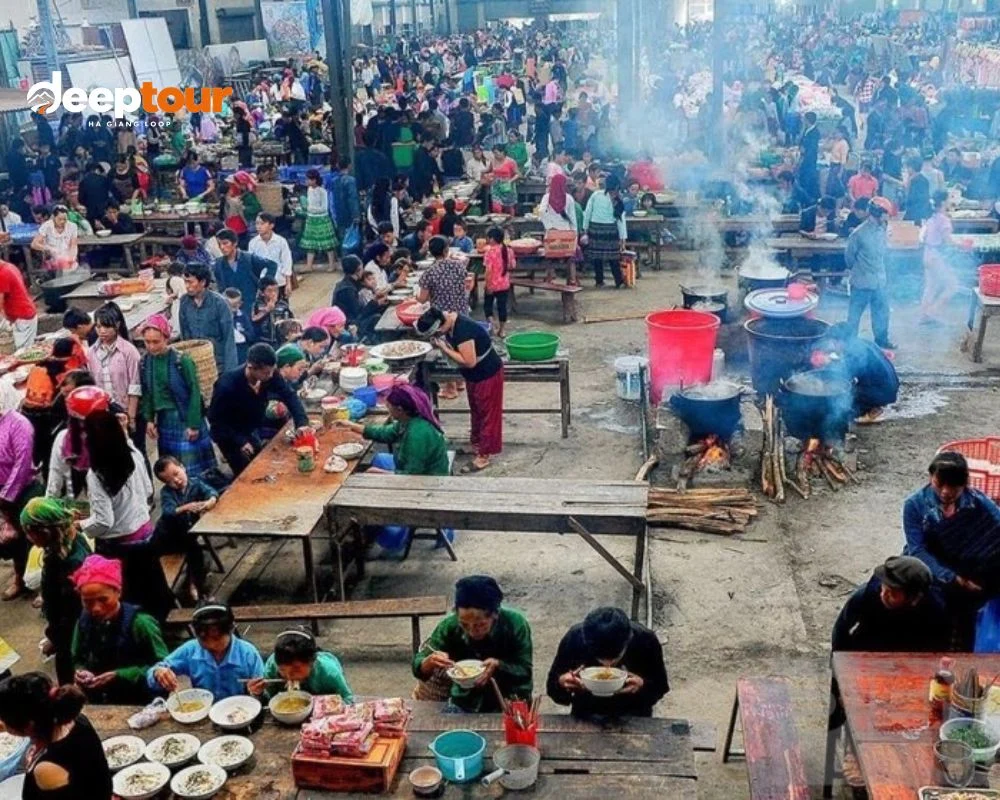
Sunday mornings in Dong Van are about more than shopping. They’re also a chance to meet, chat and catch up.
Local dishes and culinary traditions
Food in Ha Giang reflects the mountain environment and the different ethnic cooking traditions. Rice, corn, buckwheat, vegetables, herbs and meat appear in many dishes, depending on what is available.
Thang co (Thắng cố) is a well-known H’Mong specialty often found at highland markets. Traditionally made with horse meat and offal, it is slowly cooked with spices, versions with other meats also exist. Au Tau porridge (Cháo ấu tẩu) is another distinctive dish, known for its slightly bitter taste. It is made from specially processed ấu tẩu tubers with rice and broth. Because the raw tuber is toxic, only eat this dish when it has been prepared by experienced cooks.
For something sweeter, try Thang den (Thắng dền), small glutinous rice balls in warm ginger syrup is comforting on cool evenings. Five-color sticky rice (xôi ngũ sắc) gets its colors from natural plants and often appears at celebrations. Buckwheat cakes are common in areas where buckwheat is grown. Smoked buffalo meat, local sausages and various rice dishes also appear on menus and at homestays.
Each community has different food traditions and not all foods are available everywhere. Staying in a traditional homestay and sharing a meal prepared by your hosts is a good way to sample local cooking. Particularly in smaller villages notify them beforehand of any dietary needs.
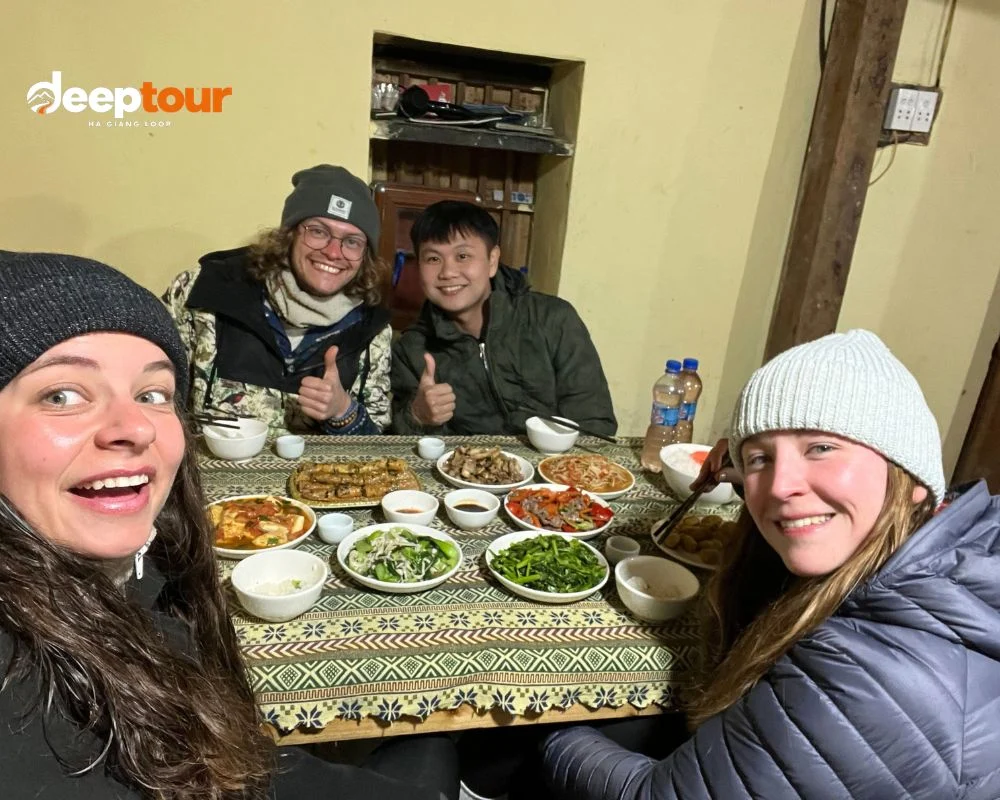
Curious about the flavors of the highlands? A local meal is a good place to start, with something different in every dish
The landscape conceals communities with their own customs, spiritual beliefs and everyday practices passed down from generation to generation. From the rammed-earth houses of H’Mong villages and the embroidered clothing of the Red Dao to Tay festivals, Pa Then fire dancing, and busy highland markets, the culture of Ha Giang offers many ways to understand the human side of the region.
Travel with care, help out the local communities where you can and leave space for the little things, they’re often the best in this special corner of northern Vietnam.